


English may be the official language of Belize, but you’ll hear a blend of Spanish, Belizean Kriol, Garifuna, and Maya languages spoken throughout the country. Each reflects the melting pot of cultures that make Belize so unique. To help you navigate the local lingo, here are the essential Belize words and phrases to know before your visit.
Languages Spoken In Belize
Official Language of Belize
English is the official language of Belize, making it the only English-speaking country in Central America. You’ll have no trouble communicating in English at hotels, restaurants, airports, and most tourist destinations. That said, Belize’s history and cultural diversity have created a multilingual country where you’re likely to hear several languages during your stay.
Other Languages In Belize
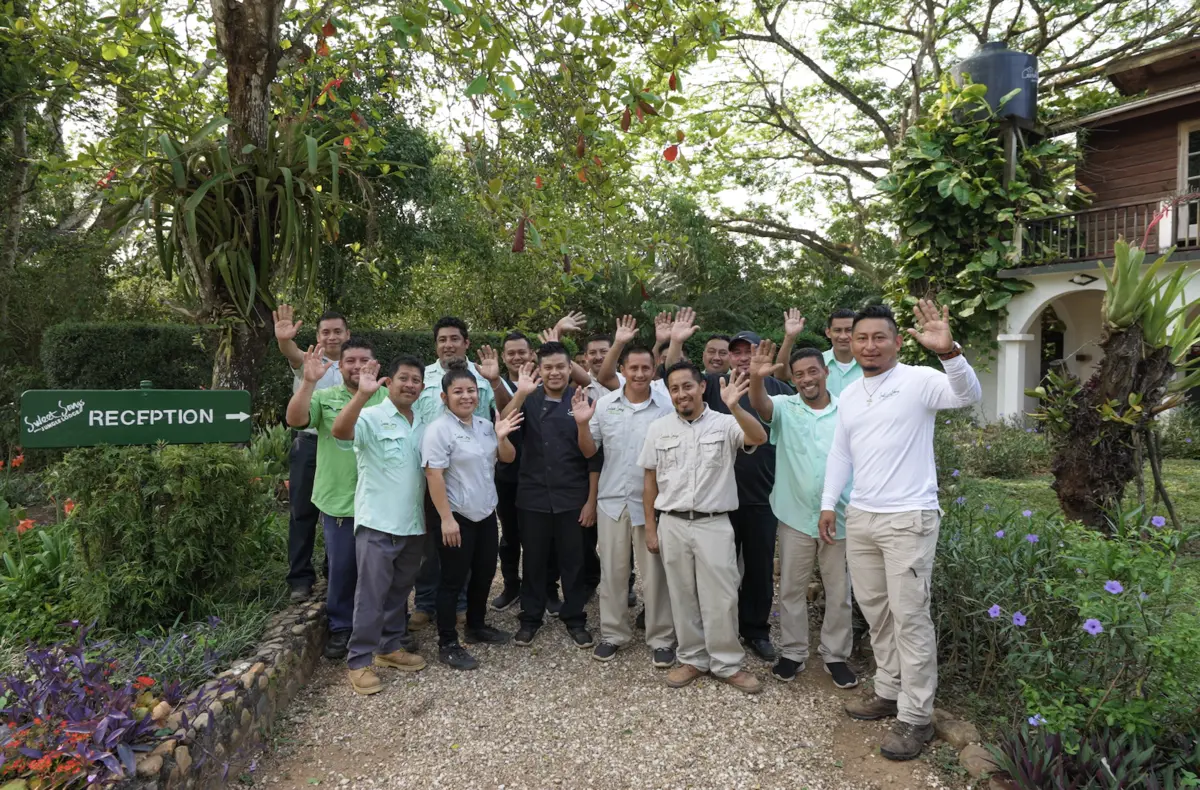
Spanish, Kriol, Garifuna, and Maya languages are all spoken in Belize. Which language you hear can depend on where you are and the community around you. Belizean Kriol is particularly common in everyday conversation, while Garifuna is an important part of the cultural identity of communities along the southern coast. You may also encounter Maya languages when visiting villages and archaeological sites in different parts of the country.
Common Belize Words & Pronunciations
Caye | “key”
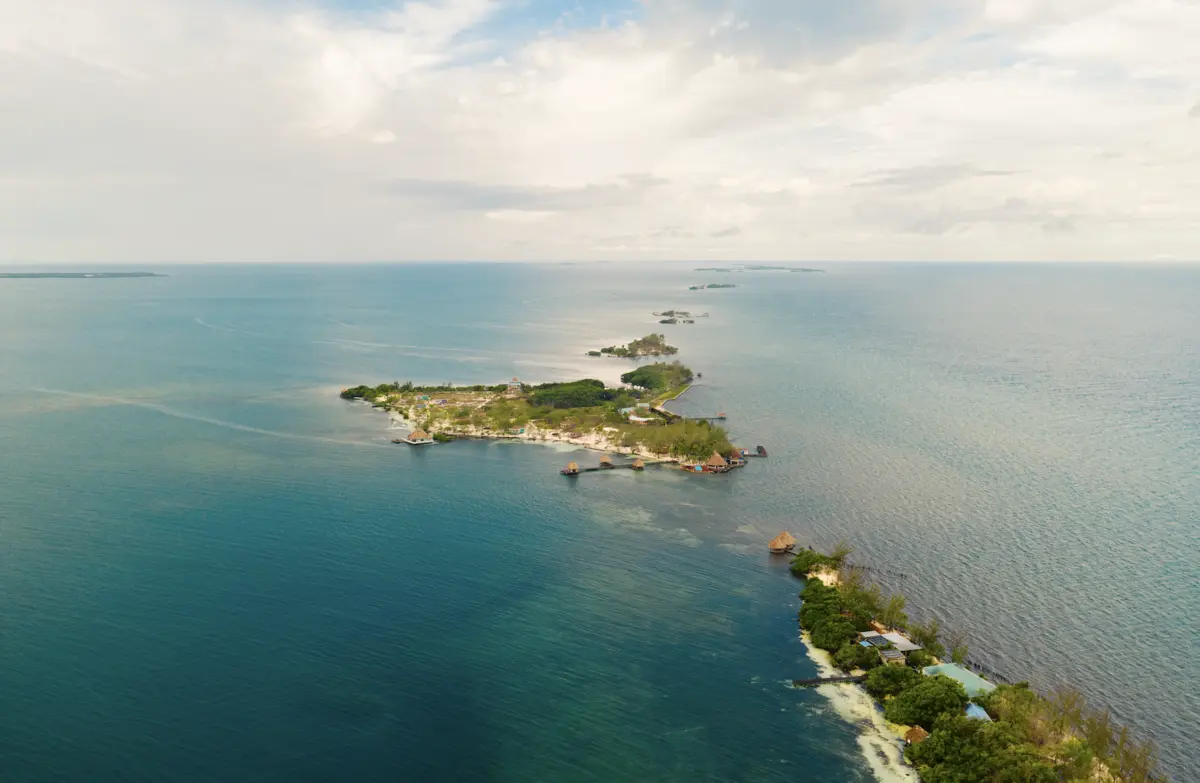
A caye is a small, low-lying island, and you’ll see the word throughout Belize. Ambergris Caye, Caye Caulker, and Thatch Caye Resort are just a few examples. The spelling may throw you off at first, but remember, caye sounds like “key.”
Palapa | “pah-lah-pah”
A palapa is a thatched-roof structure, often open on the sides. You’ll find them throughout Belize, particularly along the coast and at resorts, where they may provide shade for dining, lounging, or relaxing by the water.
Conch | “konk”
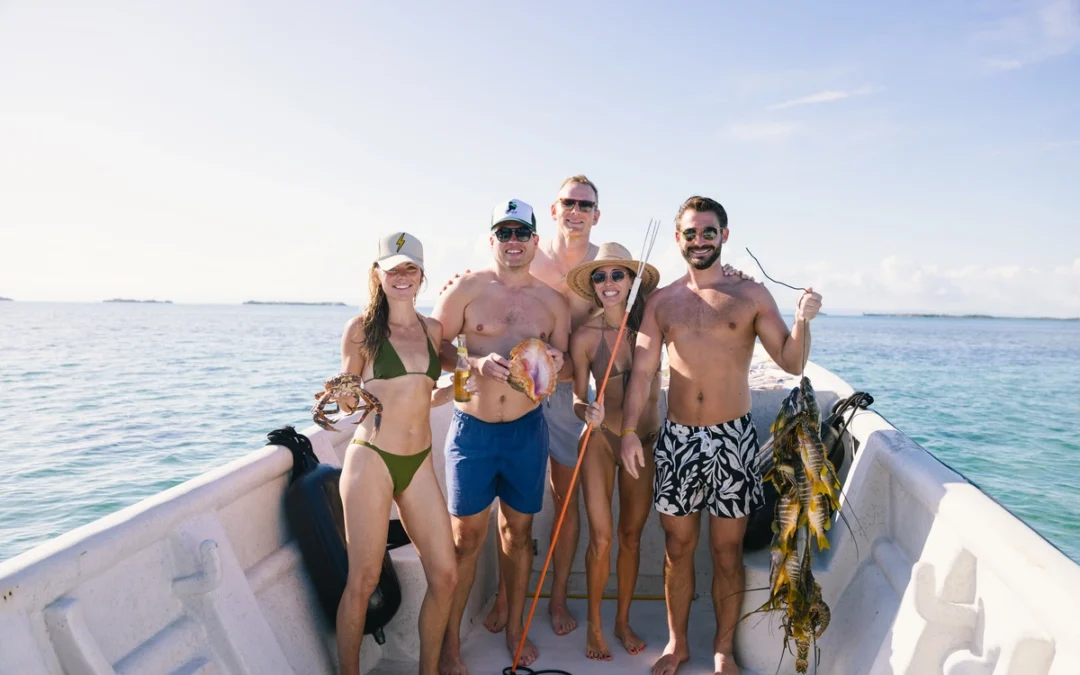
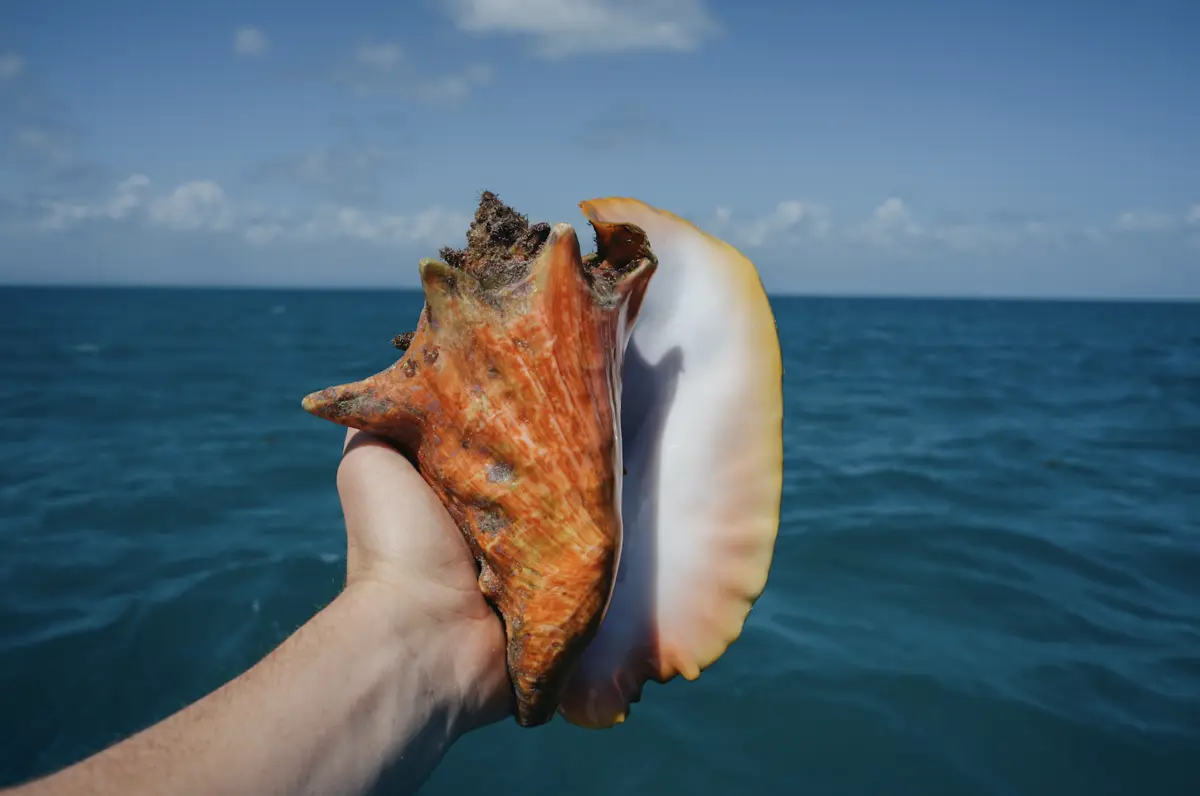
Conch is a type of marine snail found in the Caribbean and is a popular ingredient in Belizean cuisine. You may find it served raw, fried, in ceviche, or incorporated into other local dishes. Check out the Lobster or Conch Hunt snorkeling excursion at Thatch Caye Resort for a fun catch-and-cook experience.
Placencia | “pluh-SEN-see-uh”
Placencia is a popular peninsula and coastal destination in southern Belize known for its beaches, restaurants, and access to nearby marine and jungle adventures.
Xunantunich | “shoo-NAHN-too-nitch”
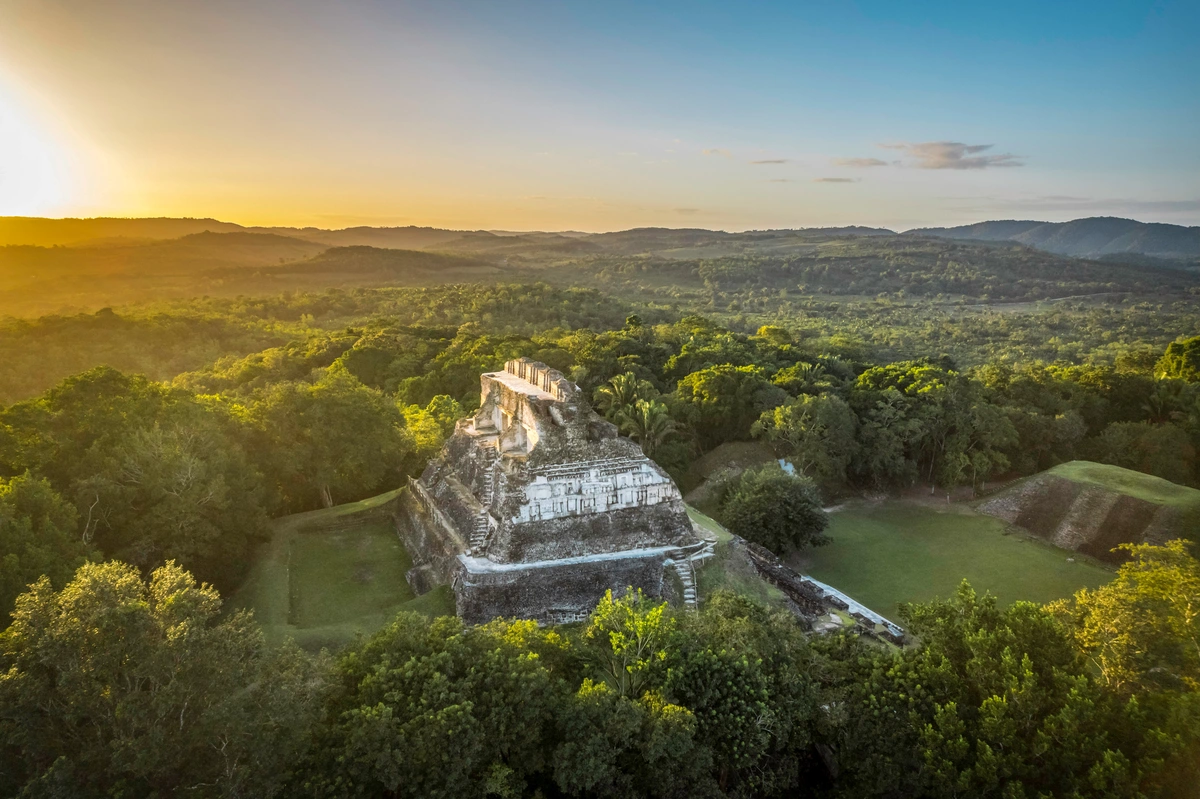
Xunantunich is one of Belize’s most remarkable ancient Maya archaeological sites. Located near San Ignacio, the site is home to El Castillo, one of the tallest Maya structures in Belize. The name may look intimidating on a map, but once you hear it said aloud, it gets a little easier.
Cayo | Pronounced “KY-oh”
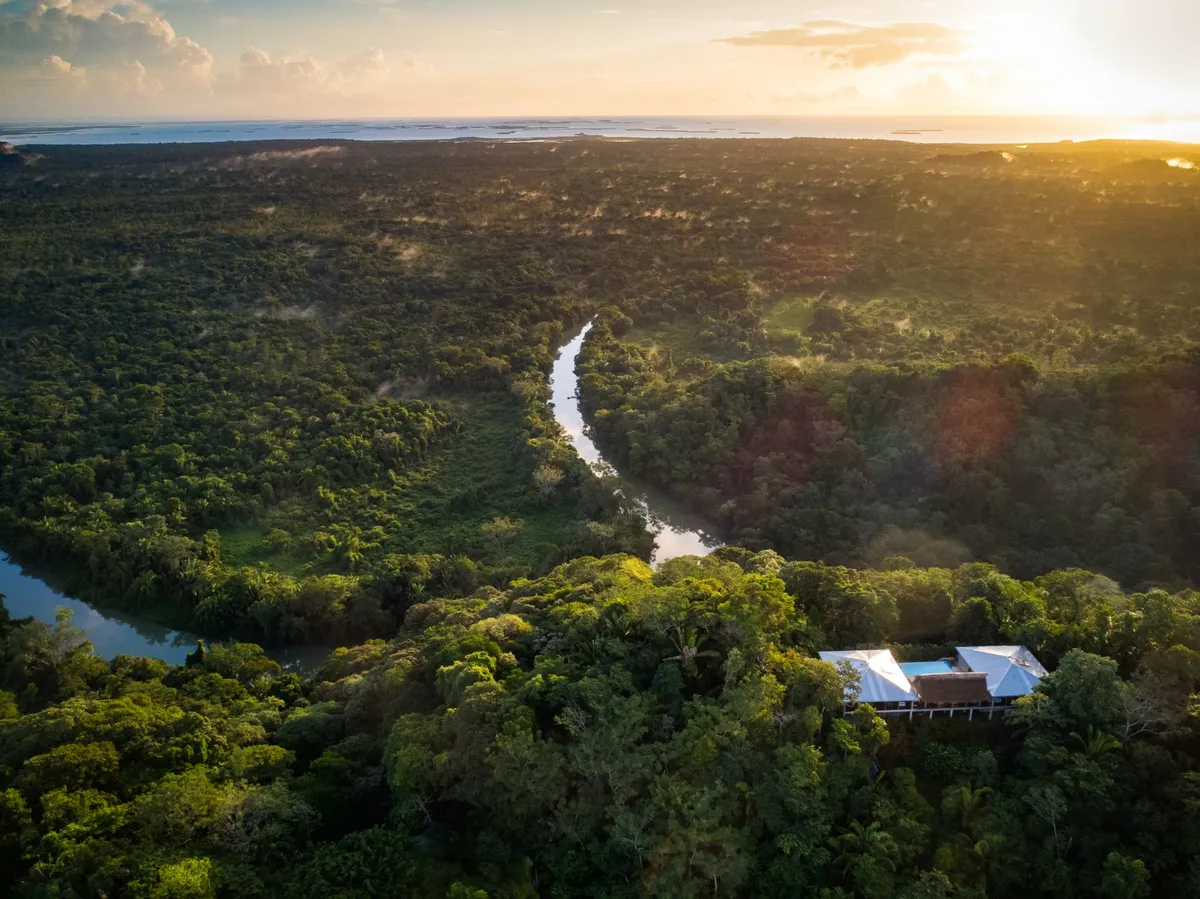
Cayo is Belize’s westernmost district, bordering Guatemala and home to lush jungles, Maya sites like Xunantunich and ATM Cave, and Sweet Songs Jungle Lodge. When you see “Cayo” in Belize, remember that it’s pronounced differently from “caye,” which sounds like “key.”
Toledo | Pronounced “tuh-LEE-doh”
Toledo is Belize’s southernmost district and one of the country’s most culturally diverse regions. It’s home to Maya and Garifuna communities, tropical rainforest, and destinations like Michelin Key-awarded Copal Tree Lodge in the Toledo District.
Popular Belizean Phrases & Words
Kriol Language In Belize
Belizean Kriol is an English-based contact language born in 17th-century logwood camps from interactions between British settlers and enslaved West Africans. While most of its vocabulary sounds like English, the language features a distinct grammar and rhythm heavily influenced by West African structures. Today, it serves as the primary lingua franca spoken widely across all of Belize.
- Gud maahnin → Good morning
- Weh gaan ahn? → What’s up? How’s it going?
- Weh yuh naym? → What’s your name?
- Fu chroo? → Really? Is that right?
- Cho! → What on earth!
- How much fi dis? → How much does this cost?
- Weh you gwein? → Where are you going?
- Ah tayad → I’m tired
Garifuna Language In Belize
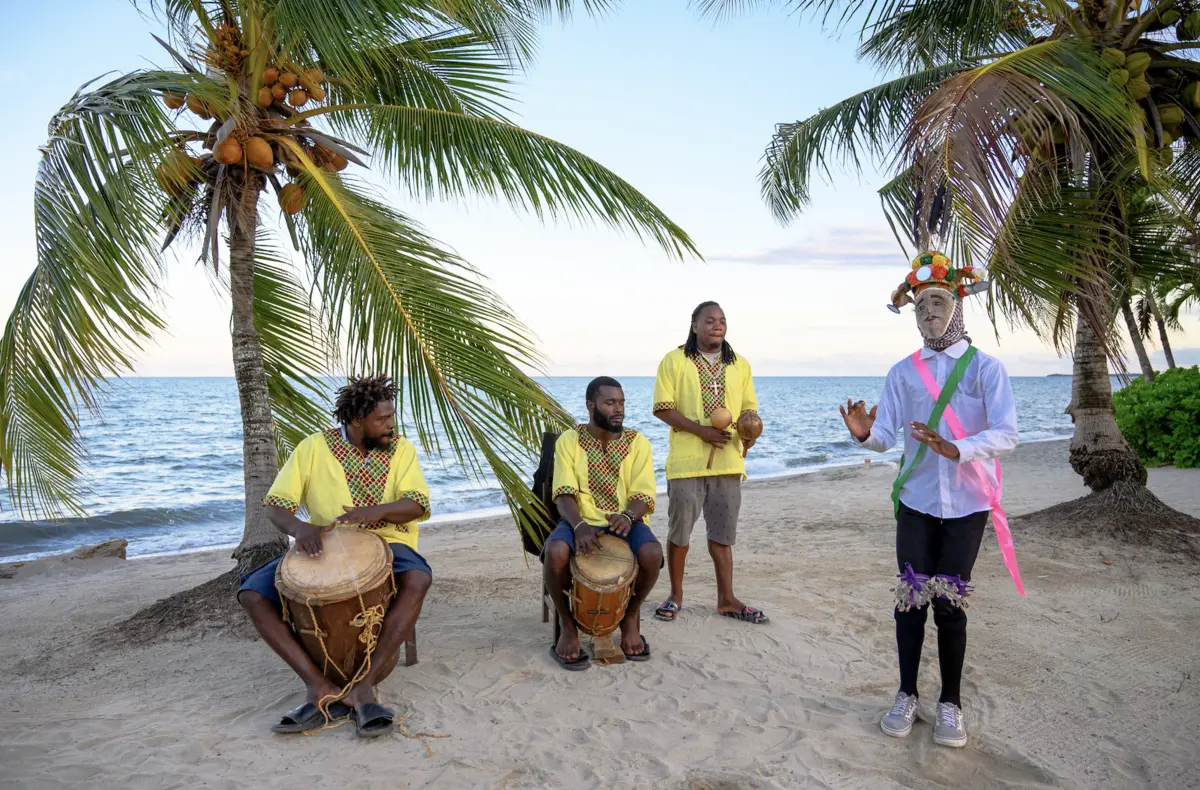
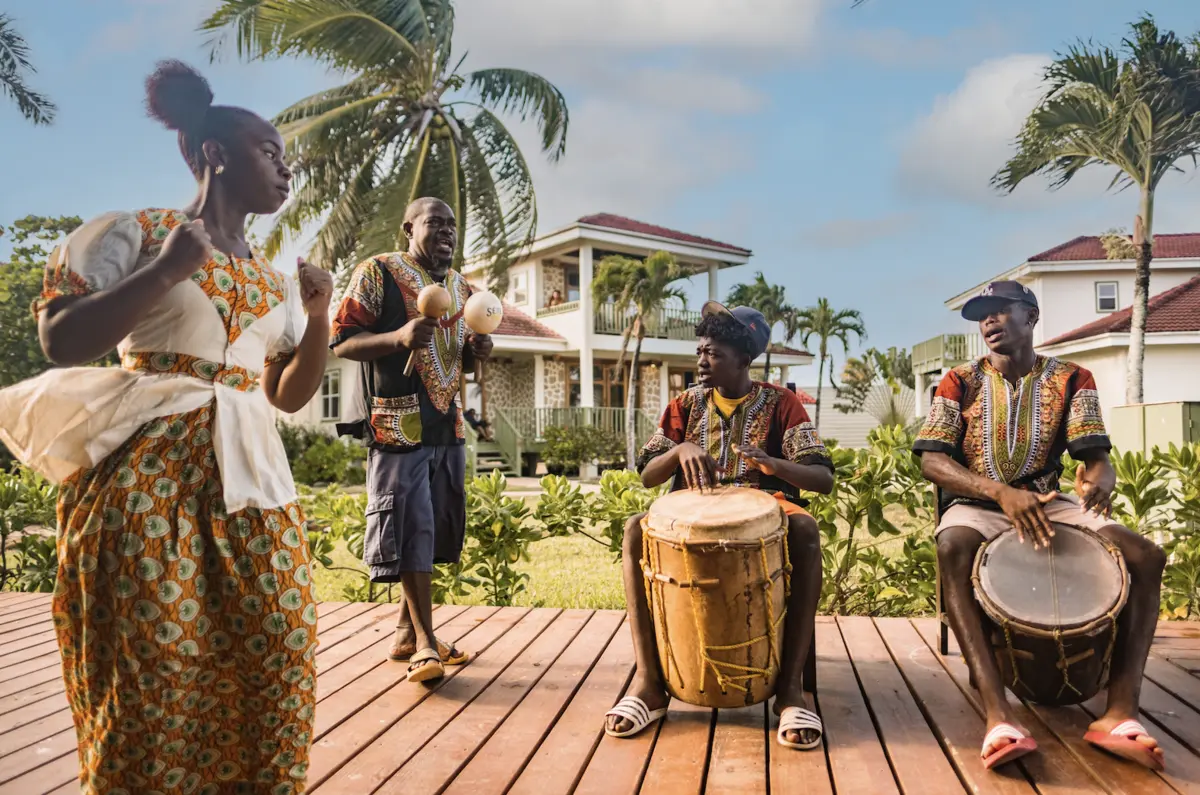
Garifuna is an Afro-Indigenous heritage language created by the mixing of West African and Indigenous Caribbean (Arawak and Carib) peoples. Recognized globally as a celebrated piece of world heritage, it remains vibrant primarily across communities in southern Belize. The language is closely tied to local cultural traditions, including soulful drumming, dance, and storytelling.
- Buíti binafi → Good morning
- Buíti gúyoun → Good afternoon
- Maburiga → Hello
- Buíti ranbá weyu → Good afternoon
- Ayóu → Goodbye
- Seremei → Thank you
- Ayi → Yes
- Ino → No
- Ferudu → Excuse me
- Ka biri? → What is your name?
Maya Languages In Belize
Maya languages in Belize, primarily Qʼeqchiʼ, Mopan, and Yucatec, are direct descendants of the ancient Maya civilization. Rather than minor dialects, they are distinct, fully developed languages with unique grammatical structures. Spoken by roughly 10% of the population, they are primarily concentrated across the southern and western districts. These descriptive languages often name objects based on their function and are deeply tied to local traditions, storytelling, and community identity.
- Bix a beel? (Yucatec) → How are you?
- Maʼalob (Yucatec) → Good / Fine
- Baʼax kawaʼalik? (Yucatec) → What is your name?
- Kuxtal? (Yucatec) → What’s up?
- Chan tzaan (Mopan) → Good morning
- Dyoos bʼot (Mopan/Qʼeqchiʼ) → Thank you
- Maal kiiŋ (Mopan) → Hello / Good day
- In-taj tzʼaanen in chéen? (Yucatec) → Can you help me?
Belize is easy to navigate in English, but using a few local words can add another layer to your trip. Whether you’re ordering food, asking for directions, or greeting a local in Kriol, a little vocabulary goes a long way. Getting to know Belize isn’t just about seeing the country. It’s about getting to know the cultures, communities, food, and people that make it what it is.